When to Test for Mold: A Utah Homeowner's Guide
- Mold Detection Pros
- May 5
- 3 min read
Not sure if you actually need a mold test? Here's a quick guide to when testing is worth it — and why who does the test matters as much as the test itself.
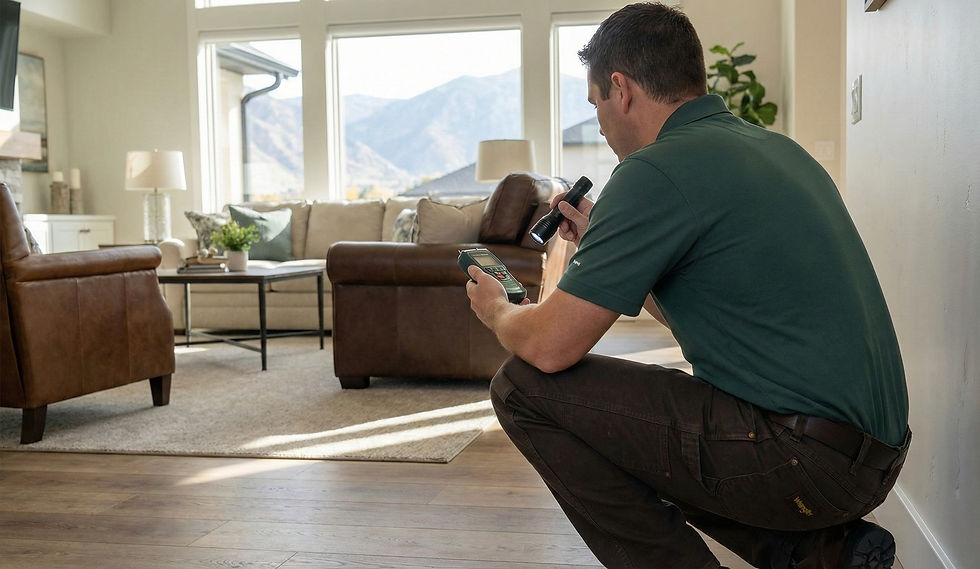
When Should You Get a Mold Test in Utah?
The Short Answer:
Test for mold if any of these apply:
You can see visible growth or smell a persistent musty odor
You or your family have unexplained respiratory or allergy symptoms at home
You've had any water damage in the last year — leak, flood, or appliance failure
You're buying or selling a home
You've had remediation done and want to verify it worked
If one of those fits, here's what you need to know.
1. You Can See or Smell It
Visible mold doesn't tell you what species it is, how far it has spread inside the wall, or whether spores are airborne — and that last part is what affects your health.
A musty smell matters even more. Mold gives off compounds your nose can detect long before mold becomes visible. If your basement, bathroom, or laundry room consistently smells off, test it.
2. Someone Isn't Feeling Right
The pattern that matters most is location-based symptoms — feeling fine away from home and worse at home. Common ones:
Chronic congestion, sinus issues, or sore throat
Coughing or wheezing that improves when you leave
Headaches or brain fog
Worsening asthma or allergies
Testing won't diagnose a condition, but it can tell you whether your home is contributing to one.
3. You've Had Any Water Event in the Last Year
This is the one most homeowners underestimate. Mold needs a spore, an organic food source, and moisture. Spores and food sources are already in your house — moisture is the variable.
Any water event creates the conditions for mold growth within 24 to 48 hours. That includes:
A dishwasher, washing machine, or water heater leak
An ice maker line dripping behind the fridge
A roof leak after heavy snow or spring melt
A basement that took on water during a storm
A toilet supply line that let go while you were out
Utah's dry climate gives homeowners a false sense of security. The moment water gets trapped inside a wall or under a floor, the climate inside that cavity is a completely different story. We've tested plenty of homes across Salt Lake, Utah, and Davis Counties where a leak "dried out fine" months earlier — and the mold told a different story.
4. You're Buying or Selling a Home
A standard home inspection is not a mold inspection. Inspectors note visible damage, but they don't take air samples or lab-test what's in the HVAC system.
Buying: A mold test before closing keeps you from inheriting a problem that could cost thousands to fix later — especially in older homes or those with finished basements.
Selling: A clean test gives buyers one less reason to back out or negotiate down.
5. You've Already Had Remediation Done
If the same company that found the mold also removed it, they're grading their own homework. An independent post-remediation test confirms — with lab results — that the work actually fixed the problem before you close the walls back up.
Why Unbiased Testing Matters
Most Utah companies that test for mold also remove it. That sounds convenient, but it's a built-in conflict of interest: the person deciding whether you have a mold problem is the same person who profits from saying you do.
That's why Mold Detection Pros exists. We only test. We don't do remediation, and we never will. Samples go to an independent lab, you get the report, and what you do next is up to you. If the test is clean, we'll tell you. If it's not, we'll explain what the lab found — without quoting you a remediation bill on the way out.
Ready to Test?
Mold Detection Pros provides independent, lab-verified mold testing across Utah. Call us or request a test on our website to schedule an inspection.


Comments